
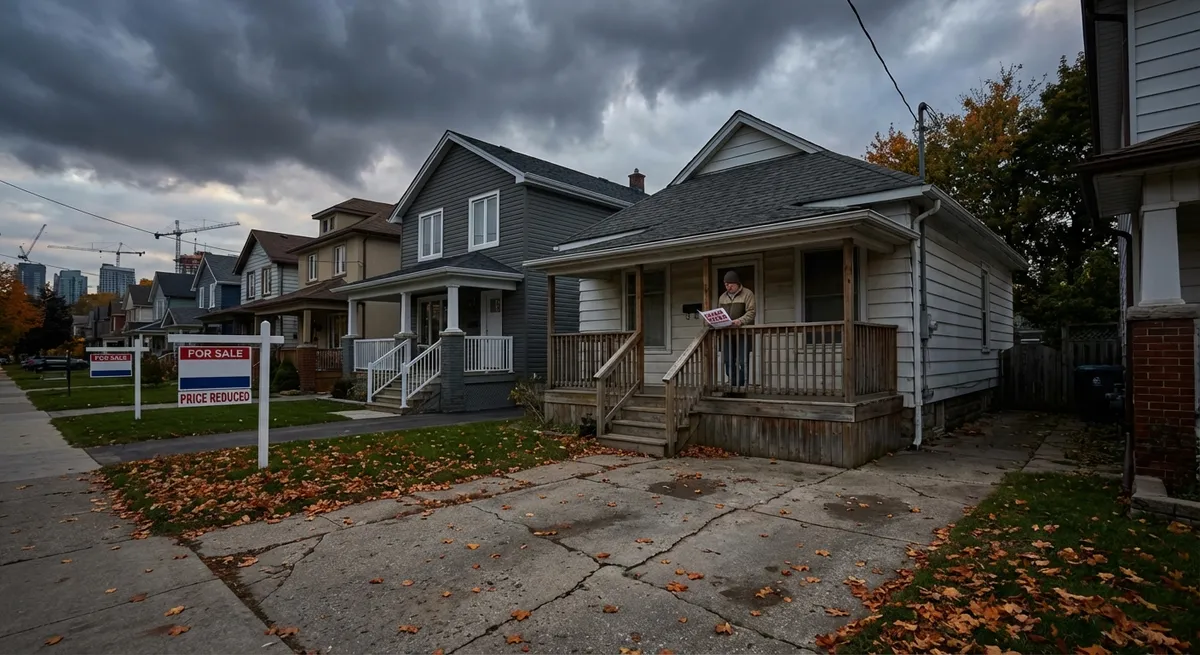
Market Shift Signals Homeowners Should Watch Before Taking a Cash Offer
When you need to sell quickly, it’s tempting to grab the first cash offer that comes your way—especially when the market feels unpredictable. But speed doesn’t have to mean guesswork. By paying attention to a few key market signals, you can move fast and still feel confident you’re not leaving thousands on the table. This guide walks through what’s happening in the market, what to watch in your local area, and five practical tips to help you sell quickly for cash without flying blind.
How Today’s Market Conditions Affect Fast Cash Sales
Housing markets have cooled from the frenzy of 2021–2022 in many areas, but conditions vary wildly by city and neighborhood. Some pockets are still seeing multiple offers in days; others are sitting on the market for months. This difference matters if you’re considering a fast cash sale, because your leverage changes with the local temperature of the market.
If you’re in a “hot” submarket with low inventory and strong demand, you may be able to negotiate a higher cash price or even spark a small bidding environment among cash buyers. In a “soft” market with many listings and slower sales, a reliable, as‑is cash offer can be worth more than squeezing every last dollar out of the price—especially if you’re facing deadlines, job relocation, or financial pressure.
Interest rates are a major driver too. Higher mortgage rates can knock financed buyers out of the game, giving cash buyers relatively more power. But that same environment can also push some investors to hunt for discounts. Understanding where your local market sits—seller’s market, balanced, or buyer’s market—helps you decide how aggressively to negotiate and how quickly to move when a serious cash buyer appears.
Key Local Signals That Tell You How Much Leverage You Have
Before you accept a cash offer, it’s worth taking 30–60 minutes to understand the “pulse” of your immediate area. Start by looking up recent sales in your ZIP code or neighborhood—ideally homes within half a mile that closed in the last 3–6 months and are roughly similar in size, age, and condition. Many listing sites show whether a property sold above, at, or below its asking price. This gives you a quick read on how competitive buyers are.
Pay close attention to “days on market” for those comparable sales. If most homes sold in under 15–20 days, demand is strong; if they’re sitting 60–90 days or more, buyers are pickier and slower. Also look at price reductions—if a lot of listings show multiple cuts before selling, that’s a sign that sellers are over‑pricing in a cooling area.
Talk to at least one local real estate professional (even if you don’t plan to list traditionally). Ask specific questions: Are investors active in this neighborhood? Are they mostly flipping or renting? Are they offering close to list price or significantly lower? You don’t need a full market report—you need a clear snapshot of how your kind of property is performing so you don’t accept a lowball cash offer when the market might support better.
Understanding the Trade‑Off: Speed, Certainty, and Net Proceeds
Selling quickly for cash is always a trade‑off among three things: how fast you close, how certain the deal is, and how much money you walk away with. Cash buyers typically offer a discount compared to a top‑of‑market financed buyer, but they also cut out major friction: no lender approval, fewer contingencies, and the ability to sell as‑is.
Think in terms of “net proceeds,” not just headline price. With a traditional listing, you may get a higher sale price, but you’ll likely pay agent commissions, possibly cover buyer concessions, make repairs, and keep paying mortgage, taxes, utilities, and insurance while you wait for closing. A solid cash offer might be lower on paper but higher in what you ultimately keep—especially if you’re avoiding months of holding costs and stress.
Your situation drives how you value speed and certainty. If you’re carrying two mortgages, navigating a divorce, settling an estate, or facing foreclosure timelines, a clean, fast close can easily be worth more than squeezing out an extra 5–10% in price. Being clear about your priorities before negotiating with any cash buyer helps you choose confidently instead of reacting under pressure.
Five Practical Tips to Sell Quickly for Cash Without Regrets
Even if your top priority is speed, a little preparation and strategy goes a long way. These five tips can help you move fast while still protecting your bottom line and peace of mind.
1. Get a Baseline Value Before You Talk to Cash Buyers
Before you entertain any offer, get a rough idea of what your home might fetch in a traditional sale. You don’t need a full appraisal, but you do need a grounded range—otherwise, you’re negotiating blind.
Use multiple free valuation tools online rather than trusting a single estimate, since algorithms can be off by tens of thousands. Then, check recent comparable sales manually to sanity‑check those numbers. If possible, schedule a quick conversation or informal walk‑through with a local agent and ask, “Realistically, what would this sell for in 30–60 days, and what would I likely net after fees and repairs?”
This baseline lets you evaluate cash offers as a percentage of realistic market value, not of a wishful asking price. A cash offer at 80–85% of true market value that closes in two weeks might be excellent in a soft market; the same offer might be too steep a discount in a red‑hot area. Knowing the numbers turns an emotional decision into a practical one.
2. Prioritize Buyers Who Can Prove Funds and Close on Your Timeline
Not all “cash buyers” are equal. Some are well‑capitalized investors or companies with verifiable funds; others are wholesalers who put your house under contract and then scramble to find a real buyer. When speed matters, you want the former, not the latter.
Ask any cash buyer for proof of funds—a recent bank statement, letter from their financial institution, or evidence of a dedicated purchasing fund. Confirm that the name on the proof of funds matches the party on the contract or their business entity. Also ask: How many properties have you closed in this area in the past year? Can I talk with a recent seller you’ve worked with?
Clarify timing expectations up front. If you need to close in two weeks but stay in the home for 30 days after closing, discuss a rent‑back or occupancy agreement before you sign anything. A serious cash buyer will be used to these conversations and able to explain the process clearly. If someone dodges proof‑of‑funds questions or pressures you to sign immediately “before the money disappears,” that’s a signal to step back.
3. Use Simple, High‑Impact Prep Instead of Full Renovations
For a fast, as‑is cash sale, you don’t need to pour money into full renovations. However, a few focused, low‑cost steps can still move the numbers in your favor and make your property more attractive to solid buyers who can close fast.
Focus on safety, function, and obvious eyesores first: fix leaks, address tripping hazards, replace broken locks, and ensure all utilities are functioning. These kinds of fixes can prevent a buyer from discounting heavily for perceived risk. Then do basic cleanup: remove trash, clear surfaces, mow the lawn, trim bushes, and improve lighting. A property that feels safe, accessible, and manageable is easier for a cash buyer to evaluate and less likely to trigger a “big discount” mindset.
Be transparent about what you haven’t fixed. Providing a simple list of known issues can actually build trust. Many cash buyers expect problems; uncertainty is what scares them more than the repairs themselves. Clear, honest information helps them move faster and closer to your asking price.
4. Compare Total Offer Terms, Not Just the Headline Price
When you get more than one cash offer—or you’re weighing cash versus a traditional route—line up the full terms side by side. Price is just one piece. Look at: inspection contingencies (or lack of them), closing date, who pays closing costs, what happens if their inspector finds new issues, and whether they’re asking for any credits or repairs.
A slightly lower offer that covers all closing costs, waives inspection repairs, and closes in 10 days can easily beat a higher price that drags out 45 days with multiple contingencies. Likewise, an offer that lets you leave unwanted furniture or belongings behind can save you thousands in clean‑out and moving expenses.
Write this out on paper or a simple spreadsheet: offer price, your estimated closing costs, estimated repairs or concessions, and your remaining mortgage balance. That gives you a realistic “net in your pocket” number for each option. Choose based on that net number plus how well the terms match your timing and stress tolerance—not just the biggest headline.
5. Protect Yourself With Clear Contracts and Local Guidance
Speed should never mean signing paperwork you don’t understand. Cash deals are usually simpler than financed transactions, but the contract still controls everything: timelines, deposits, contingencies, and what happens if someone backs out.
If your state allows it and you can afford it, consider hiring a real estate attorney for a flat‑fee contract review. It’s often a few hundred dollars and can prevent far more expensive surprises. At minimum, make sure the contract spells out: when earnest money is due and who holds it, specific closing date or range, whether the buyer can assign the contract to someone else, and what happens if inspections uncover major issues.
Use a reputable title company or closing attorney who regularly handles investor and cash transactions. They’ll run the title search, coordinate payoff of your existing mortgage, and ensure funds are wired securely. Don’t agree to unusual payment methods or skip a formal closing process, no matter how trustworthy someone seems. A clean, documented closing protects both your money and your legal interests.
Conclusion
Selling your house quickly for cash doesn’t have to feel like rolling the dice. By reading a few key market signals, getting a realistic value range, and focusing on well‑qualified buyers with clear terms, you can move fast while staying in control of the outcome. The goal isn’t just to close quickly—it’s to close quickly in a way that makes sense for your finances, your timeline, and your peace of mind.
If you’re considering a fast cash sale, treat the process like any other major financial decision: gather a few data points, ask direct questions, and compare your options in terms of net proceeds and stress saved. The right cash offer should feel like a practical solution, not a pressured last resort.
Sources
- Federal Reserve: Mortgage Debt and Housing Market Trends – Background on how interest rates and credit conditions influence housing demand and buyer behavior
- National Association of Realtors – Existing Home Sales Data – Current statistics on sales volume, days on market, and pricing trends across the U.S.
- U.S. Consumer Financial Protection Bureau – What to Expect at Closing – Clear explanation of the closing process, documents, and how funds are handled
- U.S. Department of Housing and Urban Development (HUD) – Selling Your Home – General guidance for home sellers, including working with professionals and understanding offers
- Cornell Legal Information Institute – Real Estate Contract Basics – Overview of key elements in real estate purchase contracts and why they matter